
Loading...
Loading...

This page explains exactly what each Elevate training program leads to — in plain English. What credential you earn, who issues it, who hires you, what they pay, what your training looks like day to day, and what funding covers.
Every credential listed below is issued by a recognized third-party authority — a government agency, a national certification body, or a federal department. Elevate prepares you for the exam. The credential itself comes from the issuing authority.

4–6 weeks · Certified Nursing Assistant (CNA)
A CNA credential means you are legally authorized to provide direct patient care in Indiana. Hospitals, nursing homes, home health agencies, and assisted living facilities require this certification to hire you. It is a state-regulated credential — not a certificate of completion from a school.
Issued by: Indiana State Department of Health (ISDH)
You attend classroom instruction covering patient care fundamentals, vital signs monitoring (blood pressure, pulse, temperature), infection control, patient mobility and transfer techniques, nutrition assistance, and medical documentation. You then complete a clinical rotation at a healthcare facility where you work with real patients under supervision.
At the end of training, you take the Indiana state CNA exam — a written test plus a hands-on skills demonstration. Results come back within days. Once you pass, your name goes on the Indiana Nurse Aide Registry.
If you qualify for WIOA funding, the program is covered at no cost — tuition, materials, clinical placement, and the state exam fee. Job Ready Indy funding is also available for justice-impacted individuals.
Many CNAs advance to Medical Assistant, LPN, or RN. Each step increases your pay and scope of practice. You can use additional WIOA funding for the next credential.

4–6 weeks · Commercial Driver License (CDL) Class A or Class B
A CDL is a federal and state license that authorizes you to operate commercial vehicles — tractor-trailers, buses, tankers, and heavy trucks. Class A covers the largest vehicles (semi-trucks). Class B covers straight trucks and buses. This is not a training certificate — it is a government-issued license.
Issued by: Indiana Bureau of Motor Vehicles (BMV)
You spend 160+ hours in classroom instruction and behind-the-wheel training. You learn pre-trip vehicle inspections, backing maneuvers (straight, offset, alley dock), road driving on highways and city streets, and BMV test preparation. You train on Freightliner, Peterbilt, and Kenworth trucks — the same equipment used by major carriers.
You take the Indiana BMV CDL skills test: pre-trip inspection, basic vehicle controls, and a road test. Once you pass, your CDL is printed on your Indiana driver license.
If you qualify for WIOA funding, everything is covered: tuition, DOT physical, drug screening, permit fees, and the BMV skills test fee. Many employers also offer $5,000–$15,000 sign-on bonuses.
After your first year, you can add endorsements (Hazmat, Tanker, Doubles/Triples) to increase your earning potential. Experienced drivers earn $60K–$75K. Owner-operators and specialized haulers can earn $100K+.

Approximately 18 months (1,500 on-the-job training hours plus required classroom instruction) · Indiana Barber License
An Indiana barber license means you are legally authorized to cut hair, shave, and provide grooming services for compensation in the state of Indiana. This is a state-regulated professional license — the same license held by every working barber in the state. It is earned through a DOL Registered Apprenticeship, which means it also carries federal recognition.
Issued by: Indiana Professional Licensing Agency (PLA) through a U.S. Department of Labor Registered Apprenticeship
You train at a real barbershop under a licensed barber instructor. You learn haircutting techniques (fades, tapers, lineups), clipper and shear mastery, shaving and beard grooming, sanitation and safety (Indiana State Board standards), client consultation, customer service, and business management. Elevate coordinates apprenticeship registration, compliance paperwork, classroom instruction, and completion documentation.
After completing all required hours and coursework, you sit for the Indiana State Board barber exam. Elevate provides exam prep materials and practice tests. Once you pass, you receive your Indiana barber license.
Apprentices are paid by their host barbershop during training — you earn while you learn. Elevate coordinates funding through state grants and employer sponsorship. There is no tuition cost to the apprentice.
After licensure, many barbers open their own shops. Others pursue cosmetology cross-licensing, instructor certification, or build a client base at an established shop.
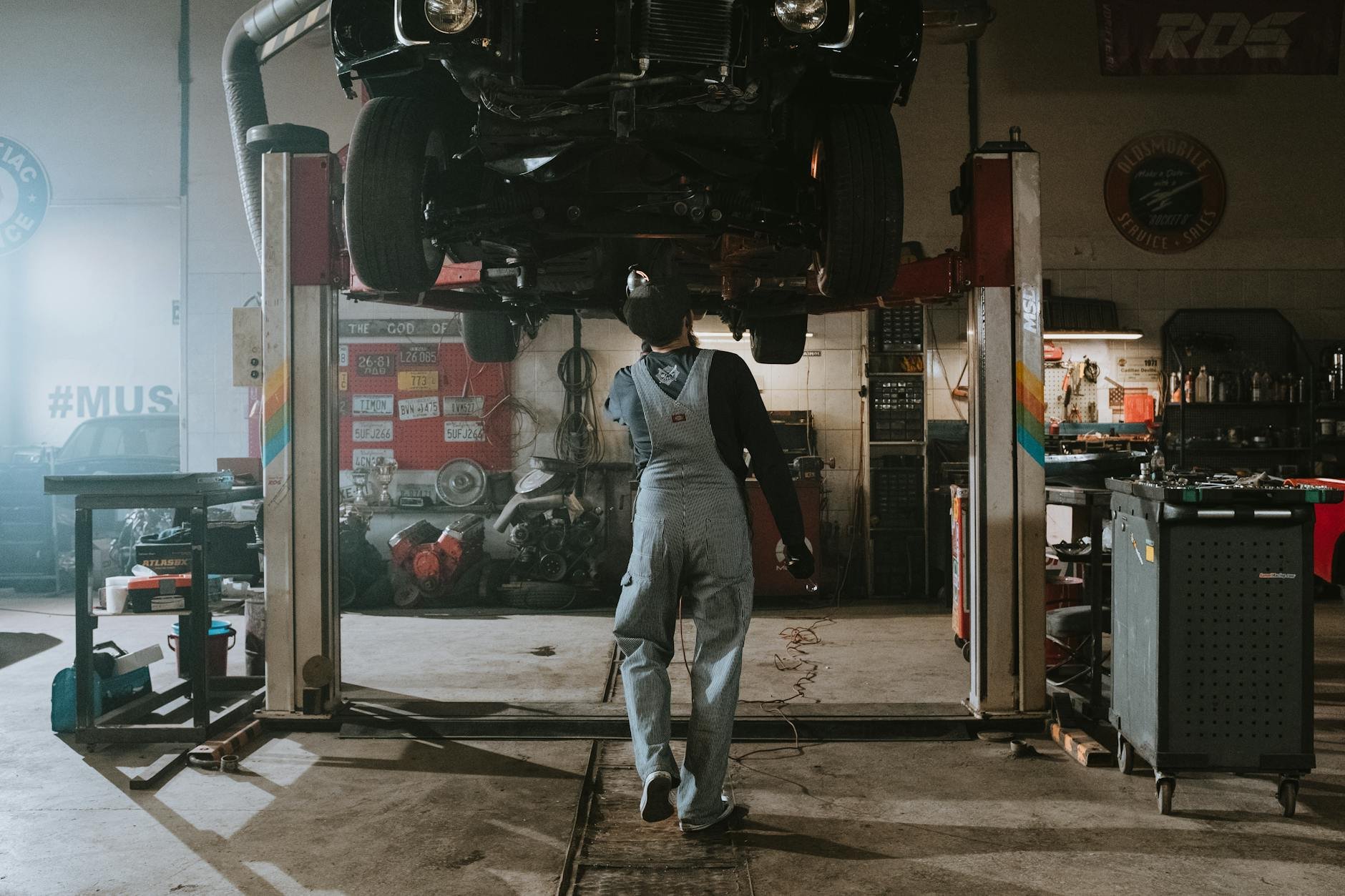
12–16 weeks · EPA Section 608 Certification + OSHA 30-Hour Safety Certification
EPA 608 certification is required by federal law to handle refrigerants — you cannot legally work on air conditioning or refrigeration systems without it. OSHA 30 is a workplace safety credential required by most construction and maintenance employers. Together, these credentials make you immediately employable as an HVAC technician.
Issued by: U.S. Environmental Protection Agency (EPA) + Occupational Safety and Health Administration (OSHA)
You learn heating, ventilation, air conditioning, and refrigeration systems. Training includes hands-on lab work with real HVAC equipment — installing, diagnosing, and repairing systems. You also learn safety protocols, OSHA standards, tool operation, blueprint reading, code compliance, and customer service. All tools, safety gear, and uniforms are provided. Graduates receive a starter tool kit. Flexible morning, afternoon, and evening classes are available.
You take the EPA 608 exam (Universal certification covering all refrigerant types) and the OSHA 30-hour safety exam. Both are administered during the program.
If you qualify for WIOA funding, the program is covered at no cost — tuition, tools, materials, certifications, uniforms, and job placement assistance. Many graduates find employment within 30 days.
After entry-level work, you can pursue OSHA 30, NATE certification (North American Technician Excellence), journeyman status, or an HVAC contractor license. Experienced technicians earn $60K–$80K+.

12–16 weeks · OSHA 10-Hour Safety Certification + NCCER Electrical Level 1
NCCER credentials are the national standard for construction trades training. Electrical Level 1 proves you understand electrical theory, the National Electrical Code, and safe wiring practices. Combined with OSHA 10, you are qualified to start work as an electrician helper or begin a formal electrical apprenticeship.
Issued by: OSHA + National Center for Construction Education and Research (NCCER)
You learn electrical theory, the National Electrical Code (NEC), residential and commercial wiring, conduit bending, troubleshooting, diagnostics, and safety protocols. No prior experience is needed — the program teaches from the ground up. This program prepares you to start a 4-year electrical apprenticeship leading to journeyman licensure.
You complete the NCCER Electrical Level 1 assessment and the OSHA 10-hour safety certification during the program.
If you qualify for WIOA funding, the program is covered at no cost for eligible participants. Many employers sponsor apprentices and pay for continued education after you complete this program.
Indiana requires 8,000 hours (about 4 years) of supervised work experience plus passing the journeyman exam. This program gives you the foundation to start that apprenticeship. Many employers sponsor apprentices and pay for continued education.
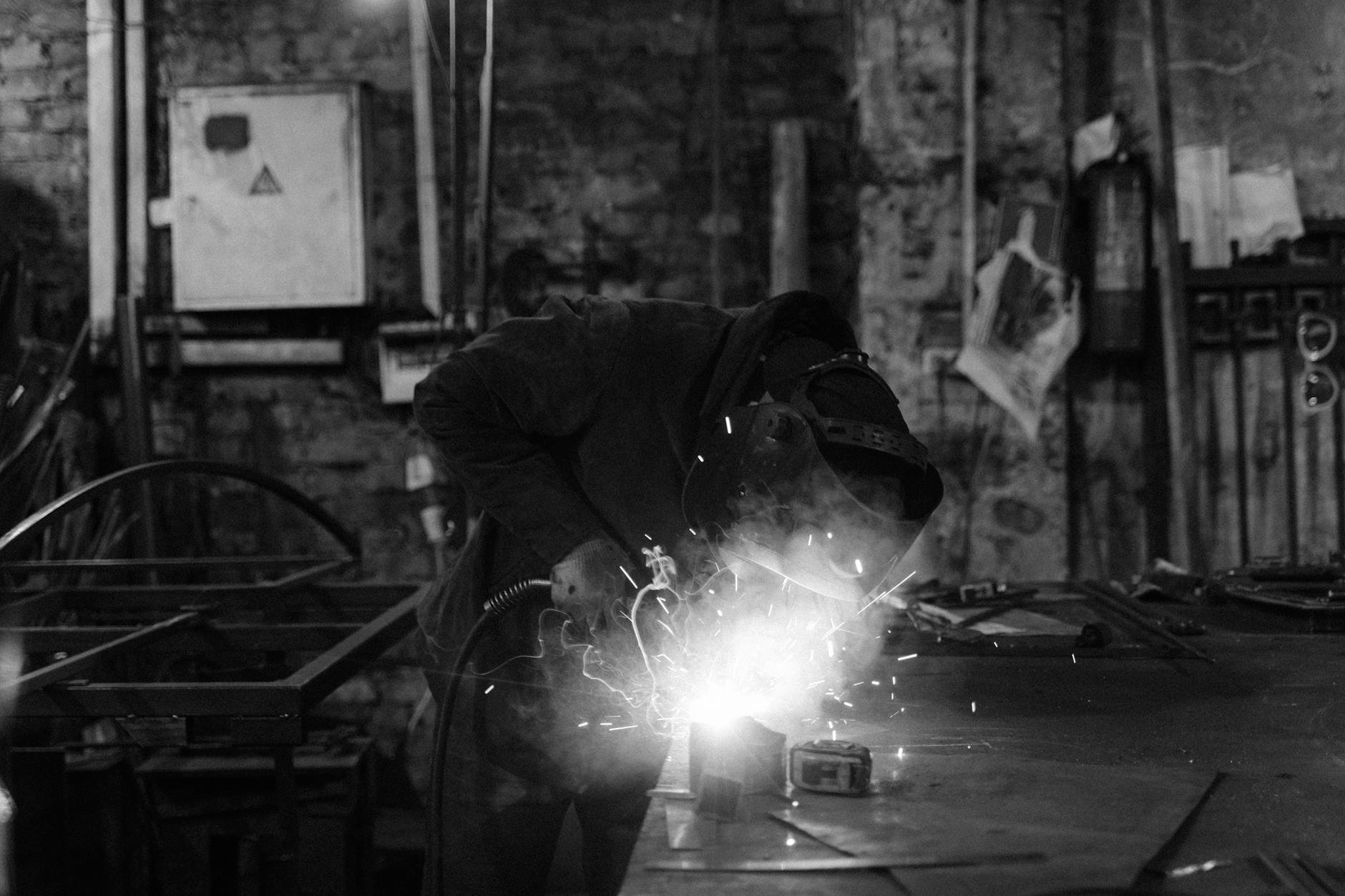
12–16 weeks (400+ hours hands-on) · AWS Welding Certifications (D1.1 Structural Steel, 3G/4G Plate) + OSHA 10
AWS certifications are the industry standard recognized by employers worldwide. They prove you can produce welds that meet structural and safety specifications. Combined with OSHA 10, you are qualified to work in manufacturing, construction, fabrication, aerospace, and energy.
Issued by: American Welding Society (AWS) + OSHA
You master four welding processes: Stick (SMAW), MIG (GMAW), TIG (GTAW), and Flux-Core (FCAW) — these cover 95% of welding jobs. You also learn oxy-fuel cutting, plasma cutting, blueprint reading, welding symbols, and metallurgy. 400+ hours of hands-on training. All safety equipment is provided (helmets, gloves, jackets, respirators). Day and evening classes available.
AWS certification testing is administered by an AWS Authorized Test Facility (ATF) with a Certified Welding Inspector (CWI). Elevate coordinates scheduling. OSHA 10 is completed in the first weeks.
If you qualify for WIOA funding, the program is covered at no cost — tuition, all safety equipment, materials, and certifications. Overtime is often available in welding careers.
After entry-level work, you can pursue AWS advanced certifications, pipe welding specialization, welding inspector certification, or journeyman status through an employer-sponsored apprenticeship.

8 weeks · Certiport IT Specialist — Device Configuration & Management
The IT Specialist certification validates entry-level IT skills — hardware troubleshooting, software installation, device configuration, and end-user support. Recognized by employers as proof you can handle day-one help desk responsibilities. Elevate is a Certiport Authorized Testing Center, so you take the exam on-site.
Issued by: Certiport
You learn PC hardware, Windows/macOS/Linux basics, software troubleshooting, remote support tools, networking fundamentals, and customer service. Includes hands-on labs and Certiport exam prep.
You take the Certiport IT Specialist exam on-site at our Indianapolis Training Center. Practice tests are included in the program.
If you qualify for WIOA or Job Ready Indy funding, the program is covered for eligible participants. Remote work is available in many IT support roles.
IT Help Desk leads to Cybersecurity Analyst, Network Support Technician, or Software Development. This is a defined career ladder: help desk → systems administrator → network engineer → cybersecurity analyst.

12 weeks · Certiport IT Specialist — Cybersecurity
The IT Specialist — Cybersecurity certification validates your knowledge of threat detection, network security, incident response, and security operations. Information security analysts are a 4-star DWD Top Job in Indiana with an average salary of $91,749.
Issued by: Certiport
You learn network security, threat analysis, malware detection, firewalls, IDS/IPS, SIEM tools, encryption, access control, and compliance frameworks. Includes hands-on labs and Certiport exam prep.
You take the Certiport IT Specialist — Cybersecurity exam on-site at our Indianapolis Training Center. Practice tests are included.
If you qualify for WIOA or Job Ready Indy funding, the program is covered for eligible participants. Remote work is standard in cybersecurity.
Cybersecurity Analyst leads to advanced roles in penetration testing, security engineering, and security architecture. Senior cybersecurity professionals earn $100K+.
Not sure where to start? Check your eligibility — it takes about 5 minutes. We will help you find the right program and the right funding.